Just You and the Game: Why Solo Play Is the Wellness Habit You Didn't Know You Were Missing
For a while there, it felt like the gaming conversation was all multiplayer, all the time. Battle royales. Co-op raids. Competitive ranked ladders. The social dimension of gaming got so dominant that playing alone started to feel almost countercultural — like you were opting out of the main event.
But something has been shifting quietly underneath all that noise. Players across the US are rediscovering the particular kind of peace that comes from a great single-player experience — no teammates to coordinate with, no opponents to frustrate you, no notifications pulling you back to the lobby. Just you, a controller or keyboard, and a world built entirely for your exploration.
And as it turns out, that solitude isn't a limitation. For a lot of people, it's the whole point.
The Difference Between Escaping and Restoring
Not all downtime is created equal. There's a meaningful distinction between passive escape — doom-scrolling, binge-watching something you're not really into, zoning out — and what psychologists call restorative experience. Restorative activities are ones that genuinely replenish your mental and emotional resources rather than just pausing the drain.
Single-player games, when chosen thoughtfully, tend to land firmly in the restorative category. Dr. Rachel Kowert, a research psychologist who has studied gaming and mental health extensively, has noted that narrative-driven games in particular can offer players meaningful emotional engagement — the kind that helps process feelings, build empathy, and even work through real-world stress in a low-stakes environment.
The key phrase there is low-stakes. In a well-designed single-player game, failure is just part of the loop. There's no one judging your performance, no social consequence for struggling, no leaderboard broadcasting your bad run. That psychological safety is genuinely valuable — it creates space to try, fail, and learn without the anxiety that often accompanies competitive play.
Story Games as Emotional Gym Equipment
If you've ever sat quietly for a moment after finishing a game like Journey, Celeste, or What Remains of Edith Finch, you know the feeling: something moved in you, and you're not entirely sure how to explain it.
That's not an accident. Story-driven games are increasingly sophisticated emotional experiences. Celeste, for example, was designed partly as its creator's exploration of anxiety and depression — and players dealing with those same struggles have described it as one of the most validating things they've ever played. Spiritfarer has become a go-to recommendation in grief support communities for the way it handles loss with gentleness and care. Hades somehow makes repetition feel like therapy.
This is the emotional gym equipment analogy that keeps coming up in conversations with mental health professionals who engage with gaming culture: just as physical exercise builds resilience in your body, emotionally engaged play can build resilience in your mind. You practice sitting with difficulty, processing narrative loss, experiencing triumph — all in a context that's ultimately safe and contained.
The Mindfulness Connection
Here's something that might surprise you: single-player gaming, done intentionally, shares a lot of structural DNA with mindfulness practice.
Mindfulness is fundamentally about sustained, non-judgmental attention to the present moment. And a well-designed game demands exactly that. When you're navigating a puzzle in The Witness or stalking through a tense section of Subnautica, your attention is completely anchored. The background noise of your to-do list, your inbox, your social obligations — it all recedes. Not because you're suppressing it, but because the game has genuinely captured your focus.
Psychologists sometimes call this state "flow" — the experience of being so absorbed in an activity that time seems to pass differently. Flow states are associated with reduced stress hormones, improved mood, and a sense of competence and agency. Games are, arguably, one of the most reliable flow-induction tools available to the average person.
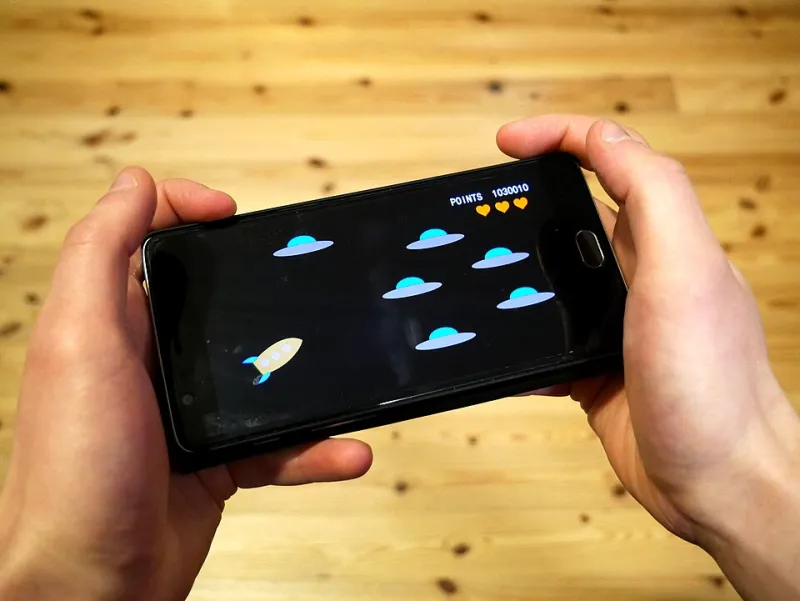
The difference between mindless gaming and intentional solo play often comes down to the game you choose and how you approach it. Reaching for your phone to play something frantic and notification-heavy before bed is a very different experience from settling in with a quiet exploration game for an hour after work.
How to Build a Solo Play Practice That Actually Works for You
If you want to start treating single-player gaming as genuine self-care rather than just something you do when nothing else is going on, a few intentional shifts can make a real difference.
Choose games that match your current emotional state — and your goal. Feeling overstimulated? Reach for something slow and atmospheric: Stardew Valley, A Short Hike, Alba: A Wildlife Adventure. Feeling numb or disconnected? A gripping narrative might be exactly the thing to reactivate your emotional range — Disco Elysium, Outer Wilds, or Firewatch are all excellent here. Feeling like you need a sense of competence and control? A satisfying puzzle game or a well-balanced action RPG can deliver that in spades.
Treat it like any other wellness habit. Set aside actual time for it rather than just grabbing whatever minutes fall through the cracks. Even 45 minutes of intentional solo play a few times a week can have a measurable effect on your stress levels and overall sense of wellbeing. Put it on the calendar if you have to.
Lose the guilt. This is a big one, especially for adults who still carry the cultural baggage around gaming being "unproductive." Rest is productive. Emotional restoration is productive. Enjoyment is not something you have to earn. Playing a game because it makes you feel good is a completely valid reason to play a game.
Give yourself permission to walk away from games that aren't working. Not every highly recommended title will resonate with you, and that's fine. If a game is creating stress rather than relieving it, it's not doing its job for you right now. Move on without ceremony.
A Few Places to Start
If you're not sure where to begin, here are some starting points organized by what you're looking for:
- Gentle and calming: Stardew Valley, Animal Crossing: New Horizons, Unpacking, Cozy Grove
- Emotionally rich storytelling: Celeste, What Remains of Edith Finch, Spiritfarer, Night in the Woods
- Immersive exploration: Subnautica, The Long Dark, Outer Wilds, Return of the Obra Dinn
- Satisfying and achievable: Portal 2 (solo mode), Into the Breach, Baba Is You, Untitled Goose Game
None of these require a massive time commitment to start, and all of them are available on platforms most people already own.
The Bigger Picture
Single-player gaming's cultural moment isn't really about rejecting multiplayer or social gaming — it's about recognizing that different types of play serve different needs. Sometimes you want the energy of a group. Sometimes you need the quiet of your own world.
There's something quietly radical about sitting down with a game made for one person and letting it have your full attention. In a culture that constantly pushes connection, productivity, and optimization, choosing to play alone — intentionally, without apology — is its own kind of act of self-care.
Play more, stress less. Sometimes the best way to do that is just you and the game.