Where Did the Last Two Hours Go? The Real Reason Games Eat Your Clock Alive
Photo: Andrea Appiani, Public domain, via Wikimedia Commons
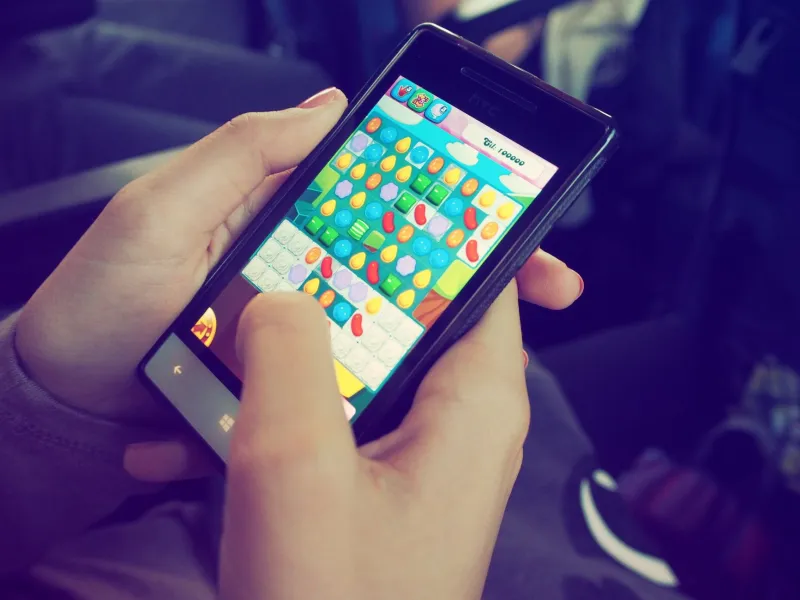
You told yourself fifteen minutes. Maybe twenty, tops. Then your phone buzzes, you glance over, and the timestamp on the notification reads 11:47 PM. You started playing at 9:30. Somehow, an entire evening evaporated while you were busy collecting resources, clearing a dungeon, or matching tiles in a puzzle game that was supposed to be a quick wind-down.
This isn't a personal failing. It's not even really about willpower. What's happening in those lost hours is a fascinating — and surprisingly well-documented — quirk of how the human brain processes time. And once you understand the mechanics behind it, you can actually do something about it without turning every gaming session into a chore.
Your Brain Has Two Clocks, and Games Break One of Them
Neuroscientists describe time perception as operating on two distinct systems. The first is prospective timing — when you're actively watching the clock, counting down, waiting for something. The second is retrospective timing — reconstructing how long something took after the fact, based on how many distinct memories you formed.
Games almost exclusively trigger retrospective timing. When you're locked into a match or chasing a high score, you're not monitoring the passage of time. You're just doing. And because many casual game environments are designed to feel continuous — no natural stopping point, no dramatic shift in scenery, no external cue that an hour has passed — your brain doesn't log enough distinct memory markers to reconstruct the timeline accurately later.
Translation: your internal clock doesn't just slow down during gaming. It quietly closes up shop and goes home.
Flow States Are the Culprit (And the Reward)
If you've read anything about peak performance or deep focus, you've probably heard the term "flow state." Coined by psychologist Mihaly Csikszentmihalyi, flow describes that sweet spot where a task is challenging enough to demand your full attention but not so hard that it tips into frustration. Gaming, especially well-designed casual gaming, is basically a delivery system for flow.
When you're in flow, the prefrontal cortex — the part of your brain responsible for self-monitoring, including time awareness — essentially steps back. You stop narrating your own experience. You stop checking in with yourself. You are just in it. That's why flow feels so good. It's a genuine break from the constant internal chatter most of us carry around all day.
The catch? Flow doesn't care about your bedtime. It doesn't care that you promised yourself you'd stop after one level. It's a state of deep absorption, and time awareness is one of the first casualties.
Game Design Is Playing the Long Game
Here's where things get interesting — and a little more intentional. Game designers know exactly how this works, and a lot of what you experience in your favorite casual games is specifically engineered to extend your session without it feeling extended.
Consider a few of the most common tactics:
No natural stopping points. Levels that flow directly into the next without a clear "okay, good place to quit" moment. You finish one puzzle and the next one loads automatically. There's no friction, no pause, no obvious off-ramp.
Variable reward loops. This one borrows directly from behavioral psychology. When rewards come at unpredictable intervals — sometimes you nail a bonus, sometimes you don't — your brain releases dopamine in anticipation, not just in response. You keep playing in case the next round delivers something satisfying. The clock never enters the equation.
Progress that feels perpetually incomplete. Whether it's a resource bar that's almost full, a daily challenge that's one task away from completion, or a character level that's just a few XP short of a milestone, games keep you in a constant state of almost there. Stopping feels like leaving money on the table.
None of this is inherently sinister — it's just smart design. But knowing it exists gives you a fighting chance.
So How Do You Actually Stay Aware Without Wrecking the Vibe?
The goal here isn't to turn your gaming sessions into a time-management exercise. That would defeat the whole point. But there's a real difference between choosing to play for two hours and accidentally playing for two hours while telling yourself it's been twenty minutes. Here are some approaches that actually work:
Set an anchor before you start, not a limit. Instead of telling yourself "I'll stop at 10 PM" (which your flow-state brain will completely ignore), set a specific alarm labeled with something you actually care about — "walk the dog," "call Mom back," "get to bed before midnight." Tying the alarm to a real-world consequence makes it harder to snooze.
Use natural breaks as checkpoints. When a level ends, a match finishes, or a cutscene starts, that's your window. Take three seconds to physically look away from the screen and check the time. You don't have to stop — just check. Awareness alone shifts how you engage.
Play in a lit room. This sounds weird, but darkness messes with your circadian rhythm and removes one of your biggest environmental time cues. Natural light fading or a lamp on a timer can serve as a passive reminder that time is actually passing.
The "just one more" rule with teeth. If you catch yourself saying "just one more level," honor it — but actually count. One more means one more. Saying it out loud, even just in your head, activates the self-monitoring part of your brain that flow tends to suppress.
Reflect after, not during. Don't try to constantly interrupt your flow to check in. Instead, build a two-minute habit of noting when you started and when you stopped. Over time, you'll develop a much more accurate internal sense of how long your sessions actually run, which makes future estimates way more reliable.
The Real Takeaway
Losing track of time during a great gaming session isn't something to be embarrassed about. It's a sign that the game is doing its job — and that your brain is capable of genuine, deep engagement. Flow is a gift. The trick is just making sure you're the one deciding when to unwrap it and when to put it back on the shelf.
Play more, stress less — but play with your eyes open. Your future self, the one who actually got enough sleep and still had time to do the dishes, will thank you.