Guilty of Playing? Here's Why Your Gaming Breaks Are Actually Making You Sharper

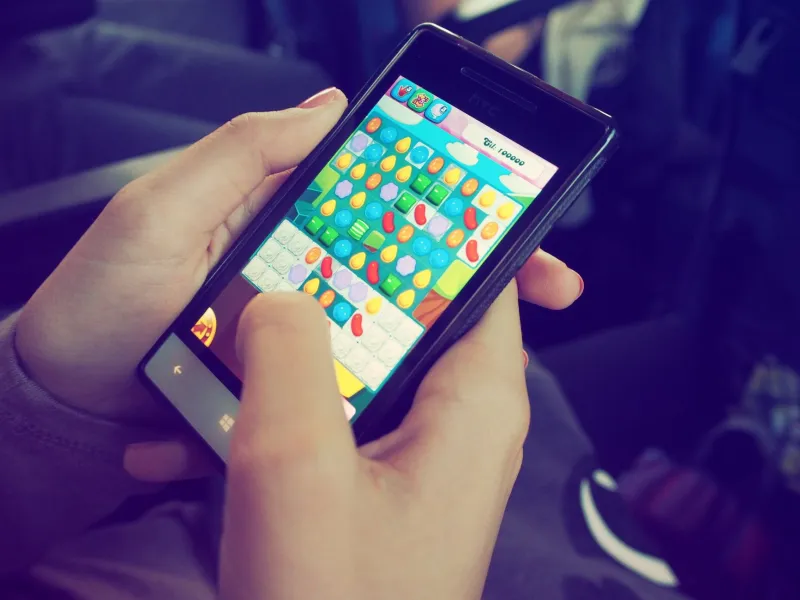
Photo: Joselodos, CC0, via Wikimedia Commons
Let's be honest. The moment you minimize that spreadsheet and open a game during a break, there's a little voice in the back of your head that says, You should be working. Maybe you even close it quickly if someone walks by. Gaming while you have things to do? Feels almost criminal.
Except — and this is the fun part — that instinct is completely wrong.
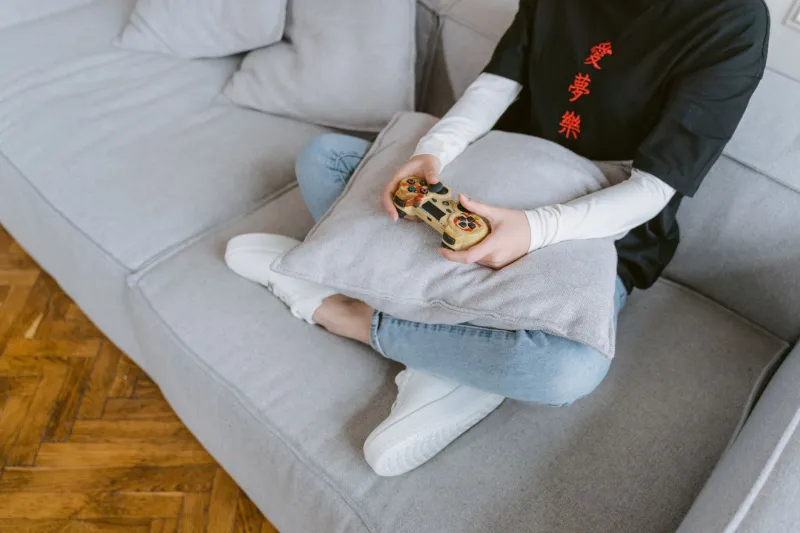
A growing body of research, backed by neuroscientists and productivity specialists, is making a surprisingly strong case that intentional gaming breaks don't just feel good. They actively make you better at the stuff you're supposed to be doing. The couch, the controller, the fifteen-minute escape into a casual puzzle or a low-stakes city builder? That might be exactly what your brain needs to perform at its best.
Your Brain Has a Battery, and You're Draining It
Here's something your boss probably didn't tell you during onboarding: sustained mental effort depletes cognitive resources in a very real, measurable way. Researchers call it ego depletion or, more broadly, mental fatigue — and it's not just feeling tired. It's a functional decline in your ability to focus, make decisions, and process new information.
Think about the last time you tried to push through a tough project for three straight hours without a meaningful break. Remember that foggy, can't-form-a-sentence feeling around hour two? That's your prefrontal cortex — the part of your brain handling planning, reasoning, and attention — running low on fuel.
The traditional fix has been coffee, which mostly just masks the fatigue, or a scroll through social media, which (plot twist) research suggests doesn't actually restore focus the way we think it does. Passive scrolling keeps your brain in a kind of low-grade alert state. You're still processing information. You're not really resting.
Gaming, on the other hand, does something different.
Why Games Are a Uniquely Effective Mental Reset
When you sit down with a casual game — something with clear rules, satisfying feedback loops, and a contained little world to navigate — your brain makes a clean context switch. You're no longer in work mode. You're in play mode. And that shift matters more than most people realize.
Dr. Judy Willis, a neurologist and former classroom teacher who has written extensively about the brain and learning, has described play as one of the most effective ways to restore the brain's readiness to engage. Play activates the brain's reward circuitry — dopamine release, positive emotional engagement, a sense of agency — all of which are associated with improved motivation and sharper focus afterward.
What makes games particularly potent compared to, say, a walk around the block or a quick meditation? A few things. Games demand just enough attention to pull you fully out of work-mode rumination. You're not thinking about that passive-aggressive email from your manager when you're trying to figure out how to clear a puzzle board or keep your little virtual town from flooding. Games also offer immediate feedback — you win, you lose, you progress — which creates a satisfying emotional resolution that passive entertainment often doesn't.
That sense of completion, even on a small scale, can be genuinely restorative.
The Strategic Break — Not Just Any Break
Here's where it gets nuanced, though. Not every gaming session is created equal when it comes to productivity payoff. There's a difference between a strategic break and an unplanned four-hour disappearance into an RPG. (We've all been there. No judgment.)
Productivity researchers who study break patterns — like those behind the famous Draugiem Group study, which found that the most productive workers took roughly 17-minute breaks for every 52 minutes of focused work — emphasize that the quality of the break matters as much as the timing. A break that genuinely disengages you from work stress is far more restorative than one where you're half-playing, half-worrying.
The sweet spot for a gaming break tends to be casual, low-stakes games with a natural stopping point. Think match-three puzzles, word games, simple strategy titles, or anything on PlayHef's rotation that you can pick up and put down without feeling pulled into an unfinishable rabbit hole. The goal isn't to get absorbed for hours — it's to give your brain a genuine 10-to-20-minute vacation before coming back sharper.
Setting a timer helps. Seriously. It removes the mental overhead of wondering how long you've been playing, which paradoxically makes the break more relaxing.
The Guilt Is the Problem, Not the Playing
One underappreciated factor in the gaming-productivity equation is the emotional weight of guilt. If you spend your entire break feeling bad about taking a break, you're not actually recovering — you're just adding stress to stress.
Researchers at the University of Melbourne found that workers who used the internet for personal browsing during short breaks (what the study called WILB — Workplace Internet Leisure Browsing) showed a 9% boost in concentration compared to those who didn't take similar breaks. The key, though, was that participants who felt guilty about it didn't show the same benefit. The psychological permission to rest was part of what made the rest effective.
Gaming works the same way. If you're going to use a game as a productivity tool, you have to actually believe it's a legitimate strategy — not a guilty indulgence you're sneaking in between tasks. Reframing the break as intentional investment rather than procrastination changes the neurological outcome.
You're not wasting time. You're maintaining the mental infrastructure that makes good work possible.
What This Looks Like in Practice
So how do you actually build gaming breaks into a productive day without it becoming a productivity disaster? A few practical approaches that tend to work:
Treat it like a meeting. Block 15 minutes on your calendar mid-morning and again in the early afternoon. Call it a focus reset. Play something casual, set a timer, and close it when the timer goes off.
Pick games with natural end states. Levels, rounds, and puzzles that resolve cleanly are your friends. Open-ended games that don't have a stopping point make it harder to walk away.
Keep it separate from reward gaming. Your big gaming session at the end of the day — the one where you actually play what you love for as long as you want — is a different thing. Don't conflate productivity-break gaming with leisure gaming. Both are valid. They just serve different purposes.
Notice how you feel after. This is the real test. After a 15-minute casual game session, do you feel clearer, lighter, more ready to work? Most people do. That's your brain telling you it worked.
Play More, Stress Less — For Real This time
The idea that rest is productive isn't new. Athletes have known for decades that recovery is part of performance. What's newer is the growing recognition that mental recovery follows the same logic — and that play, specifically, is one of the most efficient recovery tools available.
Gaming has spent years fighting the stereotype of the unproductive couch potato. But the science keeps quietly piling up on the other side of that argument. The couch isn't the enemy of your to-do list. Used right, it might actually be where your best work begins.
So next time that little guilt-voice pipes up when you open a game mid-afternoon, you've got a pretty solid counter-argument ready. You're not slacking. You're investing.
Now go play something.