Why You Can Never Quit at the Right Time: The Game Design Secrets Keeping You Glued to the Screen
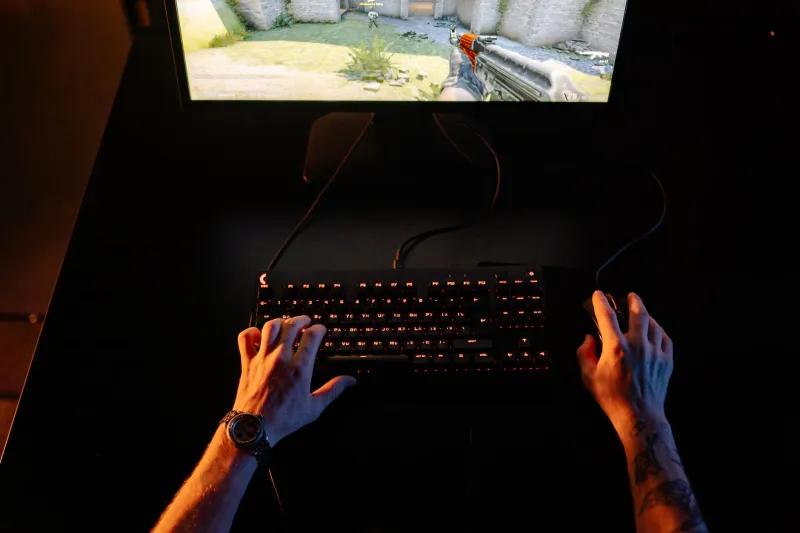
You told yourself ten minutes. That was an hour and forty-five minutes ago.
You're not weak. You're not addicted. You're a normal human being playing a game that was specifically engineered — by very smart, very well-paid people — to make quitting feel like the worst idea you've ever had. There's a reason the phrase "just one more round" has become a universal experience that crosses age, platform, and genre. It's not an accident.
Let's pull back the curtain on what's actually happening when you can't find a good stopping point, and more importantly, how to outsmart the systems working against you.
The Checkpoint Trap Is Very Much Intentional
Here's something game designers know that most players don't consciously register: checkpoint placement is a psychological tool, not just a convenience feature.
When a game saves your progress every 45 minutes instead of every 10, it creates what psychologists call the "sunk cost" effect in real time. You've already invested 30 minutes since your last checkpoint — quitting now means losing all of that. So you keep going. Then you're 40 minutes in. Then the checkpoint is right around the corner. Then you hit it, and suddenly a new objective opens up, and the clock resets.
Some developers are upfront about this. Others less so. But across the board, checkpoint spacing is calibrated to keep sessions long. Mobile games do this differently — they use energy systems and lives to create artificial urgency — but the underlying math is the same: make quitting feel costly.
Progress Bars Are Basically Slot Machines
That little experience bar creeping toward the next level? The achievement sitting at 87% completion? The daily challenge that's two steps from finished?
These aren't just visual flourishes. They're tapping directly into what behavioral scientists call "variable ratio reinforcement" — the same psychological mechanism that makes slot machines so hard to walk away from. Your brain releases a small hit of dopamine when it sees progress toward a goal. And when that goal is almost reached, the pull becomes nearly irresistible.
Game designers call this the "Zeigarnik effect" in practice: humans are wired to fixate on unfinished tasks. An incomplete progress bar is an open loop in your brain. Closing that loop feels genuinely satisfying in a neurological sense — which means the game isn't just fun, it's scratching an itch your brain didn't even know it had.
This is why so many games front-load their early levels with rapid progression. You level up fast at first, then slower, then slower still — but by the time the pace slows down, you're already hooked on the feeling of progress.
"Just One More" Is a Feature, Not a Bug
Ever notice how casual puzzle games almost always end a level right when another one is queued up? How battle royale games drop you into a new lobby the second your last game ends? How story-driven games place cliffhangers right before the credits roll on an episode?
None of that is coincidence. The industry term is "session flow," and it refers to the deliberate reduction of friction between play sessions. Remove every natural stopping point, and players keep going. It's the gaming equivalent of autoplay on streaming services — and it works for exactly the same reasons.
The difference is that unlike a TV show, games also give you agency. You're not just watching; you're doing. That active participation makes disengaging even harder, because stopping mid-game doesn't just feel like pausing — it feels like abandoning something you're in the middle of doing.
So How Do You Actually Stop?
Here's the good news: once you understand the mechanics, you can work with your own psychology instead of against it.
Set a timer before you start, not when you're already playing. This sounds obvious, but the timing matters enormously. Once you're inside a session, your perception of time warps. Setting an alarm before you pick up the controller means your future self gets a fighting chance.
Create your own stopping rituals. Instead of waiting for the "right" moment (which the game will never give you), pick a personal rule: always stop at the end of a match, always stop when you die, always stop when you clear a zone. The specific rule matters less than having one. It gives your brain a pre-approved exit ramp.
Use the pause screen strategically. Pausing breaks the flow state that keeps you locked in. If you're genuinely unsure whether to keep going, pause the game and do something else for two minutes — get water, stretch, check in with your body. You'll often find the urge to continue drops significantly once you've broken the immersion.
Know your personal hooks. Are you a progress-bar chaser? A story completionist? Someone who can't leave a match unfinished? Identifying which design mechanics hit you hardest helps you anticipate them. If you know an XP bar is going to tempt you, you can decide in advance that it's okay to leave it incomplete.
Give yourself a soft landing. Quitting abruptly feels bad partly because it's abrupt. Try spending the last five minutes of a session doing something low-stakes in-game — exploring, customizing your character, checking the map. Winding down inside the game makes the transition out feel less jarring.
This Isn't an Anti-Gaming Argument
None of this is meant to make gaming feel like a trap you need to escape. At PlayHef, we genuinely believe that games are one of the best ways to unwind, connect, and recharge — and the design elements described here are also what make games fun. Progress feels good. Finishing a story arc feels satisfying. Competing in one more match is genuinely enjoyable.
The goal isn't to play less. It's to play on your terms.
When you understand the mechanics behind the "just one more" loop, you stop feeling like something is wrong with you for getting caught in it. You start making conscious choices about when to engage and when to step away — which, honestly, makes the time you do spend playing even better.
Play more. Stress less. But maybe set that timer first.