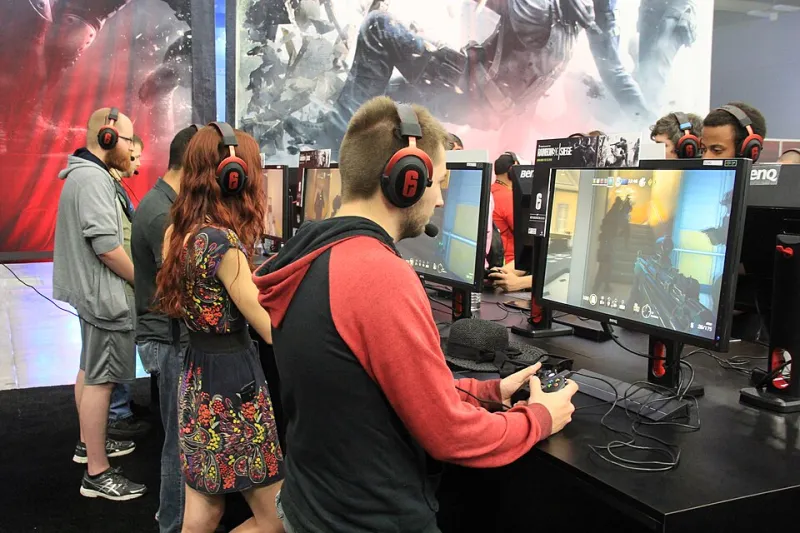
Why a Gaming Session Does More for Your Friendships Than a Group Chat Ever Could

Photo by Photo by Vitaly Gariev on Unsplash on Unsplash
Be honest — when's the last time a string of reaction emojis made you feel genuinely close to a friend? Group chats have become the default way we "stay in touch," but somewhere between the memes, the unanswered messages, and the passive scroll, something got lost. Real connection started slipping through the cracks.
What's quietly filling that gap for a whole lot of people? Multiplayer games.
Not in a "we're all addicted to screens anyway" kind of way. More like: there's something happening inside a shared game session that a text thread simply can't replicate. And researchers, gaming psychologists, and everyday friend groups across the country are starting to pay attention.
The Problem With the Group Chat
Group chats feel social. They look social. But a lot of the time, they're actually pretty passive. You're broadcasting into a void and hoping someone responds. Conversations are asynchronous, fragmented, and easy to ghost — even accidentally. You can go days without a real back-and-forth, and the whole thing can start to feel like a performance of friendship rather than the actual thing.
Dr. Rachel Kowert, a research psychologist who has studied gaming and social behavior extensively, has pointed out that digital communication often lacks the "co-presence" element that makes connection feel real. In other words, knowing someone is there with you, in the same moment, doing the same thing — that's the ingredient that matters. And that's exactly what a multiplayer game delivers.
What Games Do That Texts Can't
Think about the last time you played an online game with a friend. Maybe you were running a co-op mission together, building something side by side, or just goofing off in a sandbox world. There was probably a moment — maybe several — where something unexpected happened and you both reacted at the same time. A near-miss. A ridiculous mistake. A clutch play that came out of nowhere.
That shared reaction? That's the stuff friendships are actually built from.
Psychologists call it "synchrony" — the experience of moving through time in parallel with another person. It's the same mechanism that makes live concerts feel communal, or why watching a game with someone at a bar hits differently than watching alone. Multiplayer gaming creates synchrony digitally, which sounds like a small thing until you realize how rare that is outside of being physically in the same room.
Friend groups who game together regularly will tell you the same thing: the inside jokes that come out of those sessions are stickier than anything that ever happened in a chat. "Remember when you accidentally blew up our base?" lives rent-free in the memory in a way that a funny GIF someone sent on a Tuesday simply doesn't.
Presence Over Performance
One of the quieter benefits of playing together is that it removes the pressure to be interesting. In a group chat, there's a subtle social economy at play — your messages are read, reacted to (or not), and quietly judged. You're kind of always performing.
In a game, you're just... doing a thing together. The conversation flows naturally because you have something to talk about in real time. You're not crafting the perfect response; you're just reacting. That low-stakes, unscripted quality is surprisingly close to what hanging out in person actually feels like — something that most digital communication completely fails to recreate.
A lot of people, especially those who've moved to different cities or had kids or just gotten busy with life, say that a weekly gaming session with old friends has become one of the most grounding parts of their week. Not because the game itself is life-changing, but because it's a standing reason to show up for each other.
The "Third Place" Problem (And How Games Solve It)
Sociologists have long talked about the importance of "third places" — spaces that aren't home and aren't work, where people gather informally and build community. Think coffee shops, barbershops, bowling alleys. The classic American third place.
For a lot of adults, those spaces have become harder to access. Schedules don't align. People move. Life gets expensive. The casual, low-commitment hangout has become weirdly logistically complicated.
Online multiplayer games are functioning as a kind of digital third place for a growing number of friend groups. You don't have to coordinate transportation, figure out who's paying, or stress about being "on." You just log in. The game gives you a shared context, a reason to be there, and enough going on that silence never gets awkward.
It's not a replacement for in-person time — nothing really is. But as a way to maintain closeness between those in-person moments? It's remarkably effective.
It's Not Just for Gamers
Here's the part that surprises people: you don't have to be a "gamer" to get this. Plenty of casual, low-barrier multiplayer experiences — trivia games, party games, co-op puzzle games — require zero prior gaming experience and a whole lot of laughing. Games like Jackbox Party Pack, Overcooked, or even something as simple as a shared mobile game can create the same shared-moment magic without anyone needing to know what a cooldown timer is.
The barrier to entry has never been lower, and the payoff — in terms of actual human connection — has never been more relevant. When everyone's stretched thin and physically scattered, a game that gets two or three friends genuinely present with each other for an hour is doing something quietly powerful.
Play More, Connect More
We talk a lot about screen time like it's this monolithic bad thing, but the quality of what you're doing on that screen matters enormously. Passively scrolling? Probably not doing much for your relationships. Actively playing alongside someone you care about, sharing wins and failures and weird in-game moments in real time? That's a different category entirely.
So the next time you're tempted to just drop a meme in the group chat and call it staying in touch — maybe suggest a game instead. Your friendships might thank you for it.