Strangers Who Get It: Why Online Gaming Crews Hit Different Than Your Real-Life Friend Group
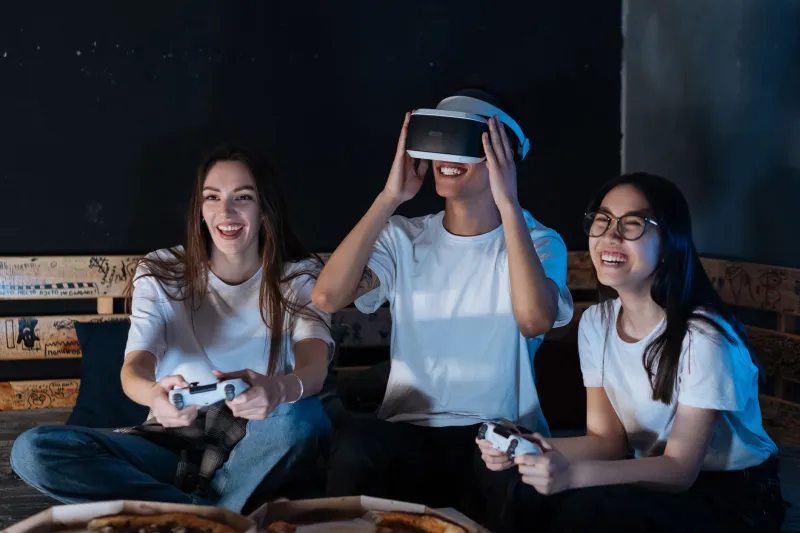
Let's be honest for a second. You've probably had a gaming session where you're laughing, strategizing, and genuinely vibing with people whose last names you don't know — and then logged off to a group chat full of half-hearted meme replies and plans that never actually happen. It's a weird feeling. A little confusing, maybe even a little guilty.
But here's the thing: you're not imagining it. That warmth you feel from your online gaming crew is real. And the reasons why it can outpace the closeness of your IRL friend group are more fascinating — and more human — than you'd expect.
The Pressure-Free Zone That Real Life Rarely Offers
When you sit down to play a casual game online, you're not walking into a social situation loaded with history, unspoken expectations, or the lingering awkwardness of that thing that happened at Thanksgiving two years ago. You're just a player, showing up to do the thing you all love.
That clean slate matters more than people give it credit for. Psychologists call it a "low-stakes social environment" — a space where you can be yourself without the weight of reputation or long-term relational baggage. Your online teammates don't know if you were the weird kid in high school. They don't have opinions about your career choices. They just know you're reliable when it counts and you called out that enemy flank before anyone else did.
For a lot of people, especially those who grew up feeling like they didn't quite fit in, that kind of judgment-free space is genuinely rare. And rare things feel precious.
Shared Goals Create Real Bonds
There's a concept in social psychology called "functional interdependence" — the idea that people bond more deeply when they're working toward a common goal together. It's why military units form lifelong friendships, why sports teams feel like families, and why your coworkers from that one brutal project still grab drinks years later.
Gaming is basically a daily workshop in functional interdependence. Whether you're coordinating a raid, building something together in a sandbox world, or just trying to survive another round of a battle royale, you are genuinely relying on each other. That shared mission creates a kind of trust that can feel surprisingly deep — even when it's built over a headset with someone three time zones away.
Your IRL friend group, meanwhile, might spend most hangouts in parallel mode: everyone on their phones, loosely occupying the same space but not really doing anything together. Proximity isn't the same as connection. Shared purpose is.
The Magic of Asynchronous Communication
Here's something that doesn't get talked about enough: a lot of online gaming communication is low-pressure by design. Quick text chats, emoji reactions, short voice callouts — none of it demands an immediate, perfectly articulated emotional response. You can process, think, and reply when you're ready.
Compare that to an IRL dinner where someone drops a heavy topic and everyone has to navigate it in real time, reading faces and body language and trying not to say the wrong thing. That's exhausting in a way that gaming communication simply isn't.
For people who are introverted, socially anxious, or just burned out from the performative nature of modern socializing, the low-demand communication style of gaming feels like breathing room. It's not avoidance — it's actually a more sustainable way to build and maintain connection over time.
Why It Can Feel More Authentic Than Forced Hangouts
Ask yourself: when's the last time you made plans with friends that you were actually excited about versus plans you felt obligated to keep? There's a growing cultural exhaustion around "performative socializing" — showing up to things not because you want to, but because you feel like you should.
Online gaming sidesteps all of that. You log on because you want to. Your gaming friends are there because they want to be. Nobody's doing anyone a favor. That mutuality — showing up purely because the activity brings you joy — creates a fundamentally different social energy than obligation-driven hangouts.
And because the game itself is the centerpiece, there's never that dreaded lull where you run out of things to talk about. The shared experience is always generating new moments, inside jokes, and memories in real time.
Spotting the Difference Between Healthy and Unhealthy Online Friendships
None of this is to say online gaming friendships are without their own complications. Like any relationship, they can slide into unhealthy territory — and it's worth knowing the signs.
Healthy online gaming friendships tend to look like:
- Mutual respect, even when things get competitive
- Feeling energized (not drained) after sessions
- Friends who check in when you've been absent, but don't guilt-trip you
- A space where you can step away without it becoming a whole thing
- Connections that occasionally extend beyond the game itself
Warning signs worth paying attention to:
- Feeling anxious or obligated to log on even when you don't want to
- Social pressure that mimics the worst parts of IRL cliques
- Relationships where you're only valued for your in-game performance
- Using online gaming as a complete substitute for any offline human contact
- Someone using game access or virtual currency as leverage over you
The goal isn't to choose between online and offline friendships — it's to recognize what each one offers and what each one costs. A good online gaming crew can genuinely supplement your social life in ways that feel meaningful and real. But they work best alongside offline connections, not instead of them.
You're Not Weird for Feeling This Way
If you've ever closed a gaming session feeling genuinely seen and then immediately felt a little strange about it — like, should I be getting this from people I've never met in person? — you're not alone. And you're not broken.
Human beings are wired to connect through shared experience, common purpose, and low-judgment environments. Gaming delivers all three. The fact that it happens across a screen and with people whose faces you might never see doesn't make the connection less real. It just makes it different.
At PlayHef, we're big believers that fun and belonging aren't things you have to earn or justify. Whether your crew is sitting on a couch next to you or scattered across six different states, what matters is that the connection is genuine — and that it makes you feel a little less alone in the world.
Sometimes the strangers who get it really do get it. And there's nothing paradoxical about that at all.