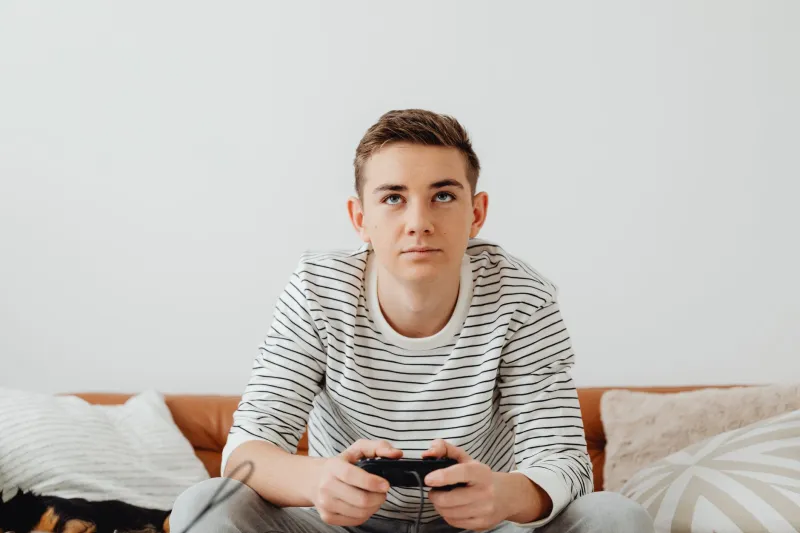
Stop Apologizing for Playing: How to Ditch Gaming Guilt for Good

You've got fifteen minutes before your next meeting. The dishes are in the sink. Your to-do list has seventeen items on it, three of which have been there since last Tuesday. And yet — you open a game.
Then the spiral starts. I should be doing something productive. I'm wasting time. I'll just finish this level and then get back to it. Sound familiar?
Gaming guilt is one of the sneakiest, most unnecessary feelings in a casual gamer's life. And here at PlayHef, we're pretty firm believers that you shouldn't have to justify your downtime to anyone — including yourself. So let's dig into why that guilt shows up, what it's actually doing to you, and how to finally shake it.
Why Your Brain Thinks Playing = Slacking
American hustle culture has a lot to answer for. Decades of "rise and grind" messaging have quietly rewired how a lot of us think about rest. If you're not producing something, learning something, or optimizing something, the cultural script says you're falling behind.
Gaming, especially casual gaming, doesn't fit neatly into any of those boxes — at least not on the surface. So when you sit down to play, your brain pulls up the guilt card almost automatically. It's not a personal failing. It's a deeply conditioned response to a culture that treats leisure like a luxury you have to earn.
Psychologists who study rest and recovery point out that this mindset is actually counterproductive. Rest isn't the opposite of productivity — it's what makes sustained productivity possible. When your brain doesn't get genuine downtime, focus tanks, creativity stalls, and decision-making gets sloppy. A gaming session isn't stealing time from your work. In many cases, it's what makes the next stretch of work actually doable.
Escapism vs. Avoidance: There's a Real Difference
Here's where it gets a little more nuanced, because not all gaming-while-you-should-be-working moments are created equal.
Escapism — the healthy kind — is when you intentionally step away from stress to reset. You play for a bit, your nervous system calms down, and you come back to the task at hand with more bandwidth than you left with. This is legitimate rest. This is what PlayHef is literally built around.
Avoidance is different. That's when you're using a game to dodge something that genuinely needs your attention — not because you need a break, but because the task feels too overwhelming or uncomfortable to face. The game becomes a hiding spot rather than a recharge station.
The honest question to ask yourself isn't should I be doing something else right now? It's am I running toward a reset, or running away from something I'm afraid to start? One of those is self-care. The other is a coping mechanism that usually makes the anxiety worse, not better.
Most of the time, a quick casual game session falls squarely in the first category. Give yourself some credit.
The Productivity Myth That's Making You Miserable
Here's something worth sitting with: the idea that every waking hour should be "useful" is a relatively modern invention, and it's not backed up by how humans actually function.
Researchers who study work patterns have found that the brain operates in natural rhythms — periods of high focus followed by periods where attention naturally dips. Fighting those dips doesn't make you more productive. It just makes you more exhausted. Working with them, on the other hand — taking short, genuine breaks when your focus starts to fade — actually improves output over the course of a day.
A ten-minute puzzle game or a few rounds of your favorite casual title during a natural energy lull isn't procrastination. It's working with your biology instead of against it. The guilt you feel during that break? That's just the hustle culture hangover talking.
Practical Ways to Game Without the Mental Weight
Knowing gaming guilt is irrational doesn't always make it disappear. Here are a few strategies that actually help.
Set an intention before you start. Instead of drifting into a game because you're avoiding something, decide in advance: "I'm taking a 15-minute break, and I'm going to play." That small act of intentionality shifts the experience from guilty sneaking to deliberate rest. It sounds simple, but it changes the mental framing completely.
Separate your work zones and play zones when you can. If you're always gaming at the same desk where you work, the context blur makes guilt worse. Even moving to the couch or a different chair creates a psychological signal that you've officially shifted into rest mode.
Finish one thing first, if that helps. For some people, gaming feels better after a small win. Knocking out one task before a break removes the nagging "I should be working" voice. This isn't about earning your rest — you don't have to — but if it makes the break feel cleaner, use it.
Stop hiding it. Closing tabs when someone walks by, making excuses for why you were "just checking something" — that behavior reinforces the shame. You don't owe anyone an explanation for how you spend your downtime. Owning it, even casually, helps normalize it in your own mind.
Keep a short list of what you actually got done. Gaming guilt often flares because the brain catastrophizes — suddenly it feels like you've done nothing all day. A quick glance at a running list of completed tasks is a reality check that cuts that spiral short.
Rest Is Not a Reward. It's a Requirement.
One of the most persistent lies productivity culture sells is that rest is something you get after you've done enough. But "enough" is a moving target that never quite arrives, which means the rest never quite feels deserved.
The reframe that actually works is simpler: rest isn't a prize for finishing. It's a regular maintenance requirement for being a functional human being. You don't feel guilty about sleeping. You don't apologize for eating lunch. Gaming, when it's serving as genuine recovery, belongs in that same category.
At PlayHef, we're not here to tell you to game instead of living your life. We're here to remind you that gaming is part of living your life — and it's a pretty good part at that. The goal has always been play more, stress less. And that starts with dropping the guilt at the door.
So the next time you've got a few minutes and the urge to play hits, go ahead. You don't need to earn it. You just need to enjoy it.