Why Your Favorite Game Might Know You Better Than Your Therapist Does
Photo: U.S. Army 297RSG by Sgt. Heidi Kroll, Public domain, via Wikimedia Commons
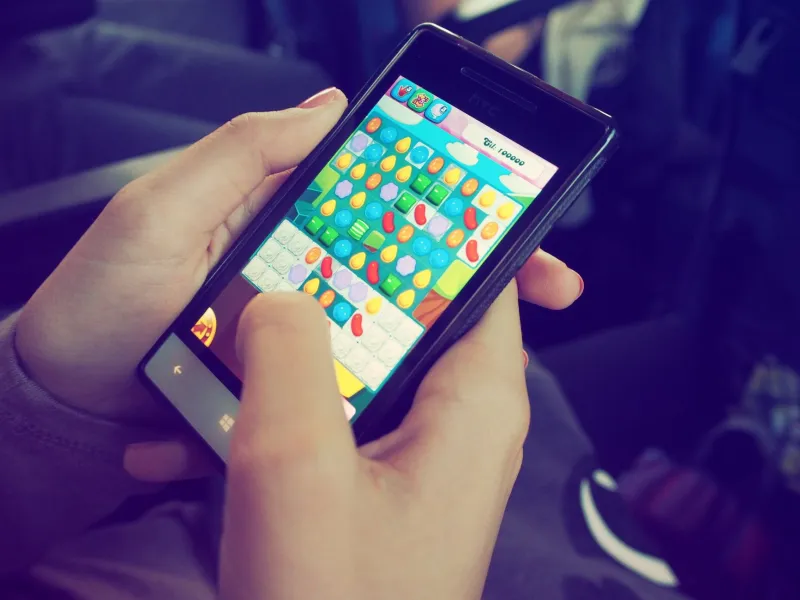
You're three rounds into a cozy farming sim at 11 p.m., and somewhere between watering your virtual crops and deciding whether to expand your barn, you realize your shoulders have dropped about two inches. The knot in your chest — the one that's been there since that difficult conversation with your boss — has loosened, just a little. You didn't set out to process anything. You were just playing.
But here's the thing: something was happening anyway.
Casual games have spent years being dismissed as time-wasters or guilty pleasures. But researchers, therapists, and game designers are increasingly pointing to something more interesting going on under the surface. These games — the ones on your phone, the ones you play in ten-minute bursts, the ones nobody takes seriously at dinner parties — are quietly functioning as emotional processing tools. And most of us have no idea.
The Low-Stakes Container That High-Stakes Life Doesn't Offer
One of the core reasons games work as emotional outlets is deceptively simple: they're safe. Dr. Rachel Kim, a licensed psychologist based in Chicago who works with adults dealing with anxiety and burnout, puts it plainly. "When life feels overwhelming, the brain craves an environment where it can practice decision-making without real consequences. Games provide exactly that. You can fail, reset, and try again — and that loop alone is genuinely therapeutic for a nervous system that's been in overdrive."
Think about the kinds of choices casual games ask you to make. Do you invest resources now or save them? Do you prioritize one relationship over another? Do you take the risky path or the safe one? These are not trivial mechanics. They're rehearsals. Players working through real-life dilemmas about careers, relationships, or finances often gravitate toward games that mirror those decision structures — even without consciously realizing the connection.
There's actually a term for this in psychological circles: displaced processing. You're not thinking directly about the hard thing. You're thinking about something that feels like the hard thing, but with the volume turned down.
Designers Are Paying Attention (Even If Players Aren't)
This isn't entirely accidental on the design side, either. A growing number of indie developers and even larger studios are intentionally building emotional resonance into their mechanics.
Marcus Delray, a game designer who has worked on several narrative mobile titles, describes it as "building a room where people can breathe." His approach involves what he calls "reflective feedback loops" — moments in a game where the player's choice is acknowledged without judgment. "We don't tell players they made the wrong call. We show them the outcome and let them sit with it. That's actually a pretty powerful emotional experience, especially for people who spend their whole day being evaluated at work or at home."
Delray points to small design details that carry outsized emotional weight: a character who remembers what you said in a previous conversation, a game world that visually changes based on how you've been playing, or a mechanic that rewards patience over aggression. "Players feel seen by those choices," he says. "And feeling seen — even by a piece of software — matters more than most people want to admit."
Anxiety, Control, and the Comfort of Rules That Make Sense
For people managing anxiety, casual games offer something that real life routinely withholds: a clear set of rules that actually work. You do the thing, you get the result. The feedback is immediate, the parameters are knowable, and the world doesn't randomly punish you for doing everything right.
That predictability is no small thing. "A lot of anxiety is rooted in uncertainty," says Dr. Kim. "Games create bounded environments where cause and effect are reliable. For someone whose nervous system is constantly bracing for unpredictability, that can be genuinely regulating."
This might explain why puzzle games, resource management titles, and cozy sims tend to spike in popularity during stressful national moments — think election cycles, economic downturns, or, well, global pandemics. People aren't just escaping. They're seeking environments where logic holds and effort is rewarded. That's not avoidance. That's coping.
The Conversations Games Let You Have With Yourself
Perhaps the most underrated function of casual gaming is the way it creates space for internal dialogue. When you're playing alone, especially in a narrative-driven game, you're constantly making micro-choices that reflect your values, fears, and desires. Do you help the struggling NPC even when it costs you resources? Do you tell the truth or take the easier path?
These moments are genuinely revelatory. Players often report surprising themselves — choosing options they didn't expect, feeling unexpectedly emotional about a storyline, or walking away from a session with a clarity they couldn't manufacture through journaling or talking it out.
"Games externalize internal experience," says Delray. "You're projecting yourself into a system, and sometimes the system reflects something back that you weren't ready to see any other way."
That's not a small thing. That's what good therapy does, too.
You Don't Have to Call It Therapy for It to Work
None of this means you need to approach your next gaming session like a scheduled appointment. The beauty of casual games as emotional tools is precisely that they work without you having to try. You don't need to set an intention or track your feelings. You just play.
But it might be worth paying a little more attention to what you reach for when things get hard. Are you gravitating toward games that offer control when life feels chaotic? Choosing cooperative play when you're feeling isolated? Picking up a familiar game when you need the comfort of something predictable?
Your choices aren't random. They're telling you something.
At PlayHef, we've always believed that play is more than a pastime — it's a real part of how people navigate being human. The science is catching up to what a lot of us have felt intuitively for years. Sometimes the most honest conversation you have all day is the one you have with a game that doesn't judge, doesn't rush you, and lets you hit reset as many times as you need.
That sounds a lot like the kind of support more of us could use.
So the next time someone asks why you're still on your phone playing that puzzle game at midnight, you can tell them you're in a session. You're just not paying a copay.