How Casual Gamers Are Stumbling Into the Zone — And Why It Feels So Good
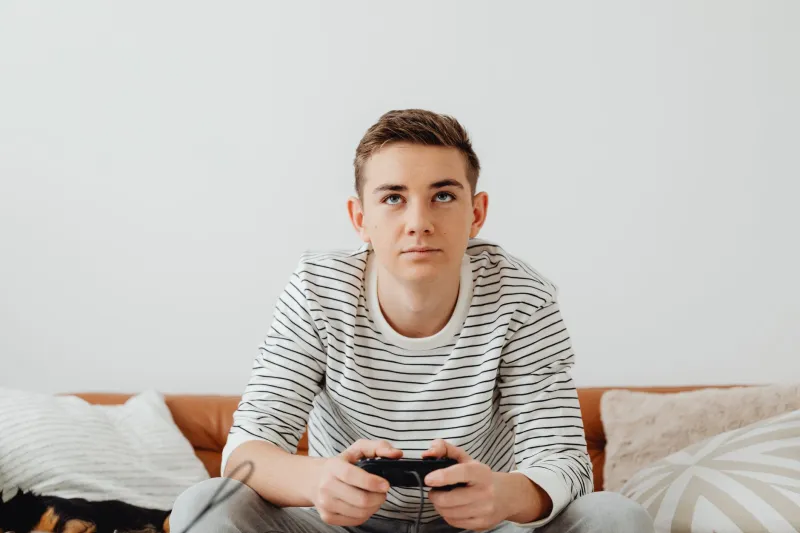
It starts innocently enough. You load up a game you've played a hundred times — maybe a puzzle builder, a farming sim, or a simple platformer you grabbed on a whim — with zero expectations and zero stakes. You're not chasing a leaderboard. You're not grinding for a trophy. You just want to do something with your hands that isn't doomscrolling.
And then, somewhere between the third and fourth run, something shifts. The outside world gets quiet. Your breath slows. You stop thinking about what you're doing and just do it. Your fingers seem to know where to go before your brain catches up.
Congratulations — you just accidentally entered a flow state. And you didn't need a coach, a competition, or a caffeine drip to get there.
What Flow Actually Is (And Why It's Not Just Gamer Talk)
Psychologist Mihaly Csikszentmihalyi coined the term "flow" back in the 1970s to describe a mental state where a person is fully immersed in an activity — energized, focused, and experiencing a kind of effortless involvement that sits right at the sweet spot between boredom and anxiety. Athletes call it being "in the zone." Musicians describe it as playing without thinking. Surgeons, rock climbers, chess players — they all know the feeling.
The thing is, flow has traditionally been associated with high-performance contexts. Elite competition. Years of deliberate practice. High stakes.
But casual gaming is quietly blowing that assumption apart.
When there's no pressure to win, no opponent to beat, and no social judgment riding on your performance, something unexpected happens: your brain relaxes into exactly the kind of open, receptive state that flow requires. The competitive edge, ironically, is what often prevents flow — because anxiety and self-consciousness are flow's biggest enemies.
The Pressure Paradox
Here's the twist most people don't see coming. You'd think that the more seriously you take a game, the better you'd get at it, right? More focus, more effort, better results.
Not exactly.
Research in performance psychology has consistently shown that over-monitoring your own performance — what some researchers call "paralysis by analysis" — actively degrades the quality of your output. When you're constantly checking yourself, critiquing every decision, or worrying about how you're doing compared to others, you engage the prefrontal cortex in ways that actually interfere with the automatic, fluid processing that skilled performance requires.
Casual gaming sidesteps all of that. When the stakes are low, the inner critic goes quiet. And in that quiet, something remarkable can happen: you start playing better than you ever have, not because you're trying harder, but because you've stopped trying to control every variable.
It's the same reason some people do their best creative thinking in the shower. The absence of pressure creates space for something deeper to surface.
The Repetition Loop Is the Secret Sauce
Another underappreciated piece of the puzzle is repetition. Casual games — especially the kind people return to again and again — tend to have relatively contained mechanics. You learn the rules, you internalize the rhythms, and over time your responses become automatic.
That automaticity is crucial. Flow states require a skill level that's just high enough to meet the challenge without overwhelming you. When you've played a game enough times that you no longer have to consciously think about basic mechanics, your brain is free to operate at a higher level — pattern recognition, creative problem-solving, intuitive decision-making.
This is why that one game you've played a hundred times might actually be doing more for your mental sharpness than a new, complex title ever could. Familiarity isn't a sign of laziness. It's the foundation that flow is built on.
Signs You've Been in Flow Without Realizing It
Flow doesn't always announce itself. In fact, one of its defining characteristics is that you often don't recognize it until it's over. Here are a few telltale signs that you've been in the zone during a gaming session:
- Time distortion: You genuinely have no idea where the last hour went.
- Effortless focus: You weren't fighting to concentrate — attention just happened.
- Physical calm: Your shoulders dropped, your breathing slowed, your jaw unclenched.
- Post-session clarity: You feel weirdly refreshed, like your brain just got a deep clean.
- Low emotional volatility: You weren't frustrated when you failed — you just tried again, almost automatically.
Sound familiar? That wasn't just a good gaming session. That was your nervous system doing exactly what it needed to do.
How to Get There More Often (Without Forcing It)
Here's the paradox of flow: you can't chase it directly. The moment you make "achieving flow" the goal, you've already undermined the conditions that make it possible. But you can absolutely set the stage.
Pick a game with a rhythm. Games with repetitive loops — match-3 puzzles, idle builders, simple platformers, cozy sims — tend to be better flow vehicles than sprawling open-world titles with constant interruptions and decision fatigue.
Ditch the performance metrics. Turn off score displays if you can. Stop checking how you rank. Play for the experience of playing, not the result.
Give it at least ten minutes before you judge the session. Flow takes a warm-up period. The first few minutes of any session are often the hardest — your brain is still switching gears. Push through the initial friction.
Play at a time when you're not already burned out. Flow requires enough cognitive resources to engage. If you're running on fumes, you're more likely to zone out than zone in.
Reduce external interruptions. Notifications, background TV, a busy room — these all fragment attention in ways that make flow nearly impossible. Even ten minutes of semi-distracted gaming won't deliver the same payoff as five minutes of genuine immersion.
Why This Matters Beyond the Game
Flow states have measurable effects on well-being. People who experience them regularly report higher life satisfaction, lower rates of anxiety and depression, and greater sense of purpose. They're also associated with improved learning — your brain consolidates skills and information more effectively when it's operating in a relaxed, engaged state.
In other words, that two-hour session you thought was just "wasting time" might have been one of the most genuinely restorative things you did all week. Not despite the fact that it was low-pressure, but because of it.
Casual gaming has always had a reputation problem. It gets dismissed as a lesser form of play — something you do when you're not serious enough for "real" games. But the science is starting to tell a different story. Removing the pressure, the competition, and the performance anxiety doesn't make the experience smaller. It makes it deeper.
You don't have to be a speedrunner to find the zone. Sometimes the fastest way there is to stop rushing entirely — and just play.