Losing on Purpose: How Getting Destroyed at Games Is Quietly Making You a Better Human
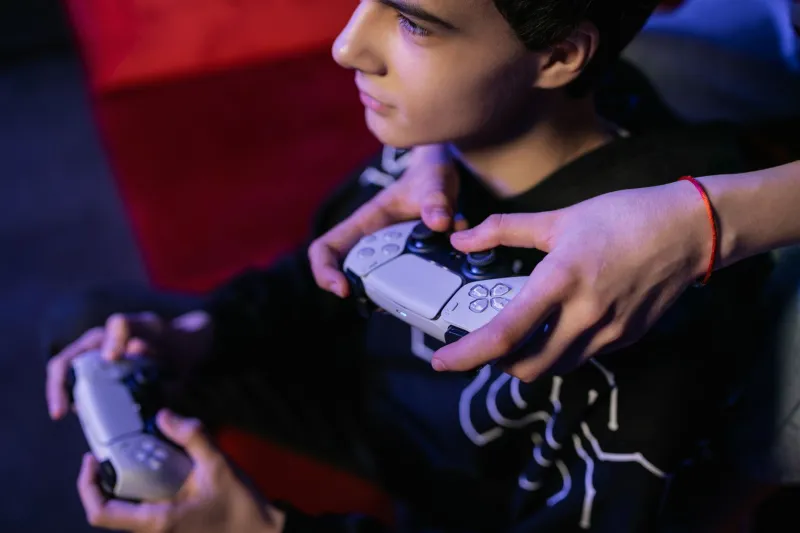
Let's talk about the moment you threw (or seriously considered throwing) your controller.
Maybe it was the fourth time you hit the same wall in a platformer. Maybe it was a last-second loss in a match you had completely under control. Maybe it was a puzzle that made you feel, briefly, like you might not be as smart as you previously assumed.
We've all been there. And if you've ever felt a flash of shame about how frustrated you got — like maybe you should be more chill about a game — here's some genuinely good news: that frustration? It's doing something important.
The Comfortable Lie About Casual Gaming
There's a widely held assumption that gaming, especially casual gaming, is supposed to be relaxing. Stress-free. Easy fun. And look, plenty of games absolutely deliver on that — cozy builders, low-stakes puzzles, idle clickers. That's a real and valid corner of the gaming world.
But the idea that gaming should always be frictionless sells the medium short. Some of the most beloved games ever made — and some of the most meaningful experiences players describe — come from games that were genuinely, punishingly hard. Games that made people want to quit. Games they eventually, triumphantly, did not quit.
That arc — frustration, persistence, breakthrough — isn't a design flaw. It's the whole point.
What Failure Actually Does to Your Brain
Researchers studying learning and performance have a term for the kind of effort that produces real growth: "desirable difficulty." The idea is that easy success feels good but teaches you relatively little. Struggle, on the other hand, forces your brain to work harder, encode information more deeply, and build more durable neural pathways.
In plain English: you remember things better when you had to fight for them.
This is why athletes train under conditions harder than actual competition. It's why students who practice retrieval (testing themselves) outperform students who just reread notes. And it's why the player who finally clears a boss after 47 attempts has genuinely developed something — patience, pattern recognition, emotional regulation — that the player who cruised through never had to.
Games are one of the few spaces in modern American life where failure is immediate, low-stakes, and completely repeatable. You can fail 50 times in an afternoon and face zero real-world consequences. That's an extraordinary environment for building resilience.
Rage Is Just Passion With Nowhere to Go
Here's a reframe that might be useful: frustration in gaming is almost always a sign that you care. You're invested. You want to succeed. The rage quit impulse isn't evidence of immaturity — it's evidence of engagement.
The growth part isn't avoiding that frustration. It's learning what to do with it.
Emotional regulation researchers talk about "affect labeling" — the practice of naming what you're feeling as a way to reduce its intensity. Studies out of UCLA have shown that simply identifying an emotion ("I'm frustrated," "I feel embarrassed," "this is making me anxious") reduces activity in the amygdala, the brain's threat-response center. You calm down faster when you name the feeling.
Gaming gives you a surprisingly good arena to practice this. When you feel the rage build, pausing to recognize it — not suppress it, just name it — is a small act of emotional intelligence. Do it enough times in a game, and you start doing it elsewhere too.
The Growth Mindset Hidden Inside Every Game Over Screen
Psychologist Carol Dweck's research on growth mindset has been hugely influential in education and sports psychology. The core idea: people who believe abilities are fixed give up when they fail, while people who believe abilities can be developed through effort actually improve over time.
Games, almost by design, teach growth mindset.
Every "Game Over" screen is a prompt: try again. Every failed attempt carries information — what didn't work, what almost worked, what you need to adjust. Players who stick with difficult games are practicing the exact cognitive habits that growth mindset research identifies as markers of long-term success: tolerating discomfort, seeking feedback, persisting through setbacks.
This isn't just theoretical. Studies on video game play and problem-solving have found that gamers tend to show greater cognitive flexibility and higher frustration tolerance than non-gamers. The causality isn't perfectly established — maybe people with those traits are drawn to games — but the correlation is real, and the mechanism makes intuitive sense.
From Rage Quit to Zen Mode: The Actual Path
Nobody skips straight from throwing a controller to serene acceptance. The journey is messier than that. But here are some patterns that experienced players — the ones who've been gaming long enough to work through their frustration cycles — tend to develop:
They separate the failure from their identity. "I failed that level" is different from "I'm bad at this." The first is information. The second is a story that makes quitting feel justified.
They treat hard games like puzzles, not tests. When a level feels impossible, shifting the frame from "am I skilled enough?" to "what am I missing?" changes everything. It makes failure feel like data instead of verdict.
They take breaks before they need them. The peak of frustration is the worst time to push through. Stepping away for ten minutes — genuinely stepping away, not just pausing and staring at the screen — often makes the problem suddenly obvious when you return.
They celebrate small progress, not just wins. Getting one phase further on a boss you've been stuck on? That's real progress. Noticing it keeps motivation alive during the long middle of a difficult challenge.
Hard Games Are a Gift You Give Your Future Self
There's something almost counterintuitive about this whole argument. We come to games to relax, to escape, to have fun. And here's an article suggesting that the most valuable gaming experiences might be the ones that make you want to flip a table.
But think about the games you remember most vividly. The ones that made the biggest impression. For most people, it's not the easy ones.
It's the ones where you finally got it. Where something clicked after a long, ugly struggle. Where you proved to yourself — quietly, in your living room, with nobody watching — that you could push through something hard.
That feeling doesn't stay in the game. It travels with you.
At PlayHef, we're all about the full spectrum of gaming — cozy afternoons, quick breaks, and yes, the glorious grind of a challenge that refuses to let you off easy. Play more, stress less — but don't be afraid of the stress that actually builds you up.